
Preparing students to build with AI—not just use it.
AI Build Lab: Student Innovation and Entrepreneurship Camp
A six-week, in-person after-school innovation and entrepreneurship experience where middle and high school students use AI to solve a real-world problem and develop an app or website solution.
The future requires more than AI access.
Students already use AI every day. What they need now is the guidance to use it responsibly, think critically, solve real problems, create meaningful solutions, and communicate their ideas with confidence.
The AI Build Lab turns AI from a tool students consume into a tool they build with.
What is the AI Build Lab?
A six-week experience that helps students move from technology consumers to creators, entrepreneurs, and problem-solvers. Students identify a challenge that matters to them and use AI and no-code technology to develop an app or website solution.
Students choose a challenge in their school, family, or community. No fake case studies.
Age-appropriate AI and no-code tools guide students from idea to functional prototype.
Every project also becomes a business or impact concept — pitched to real audiences.
From an idea → to impact.
The seven-step pathway every student walks — turning a real challenge into a functional prototype they can demonstrate, defend, and continue developing.
Same program. Two ways students experience it.
The AI Build Lab is one cohesive Grades 6–12 program with two age-appropriate paths — so what a 6th grader walks away with is meaningfully different from what a 12th grader walks away with.
Student Innovation Lab
Discover it · Design it · Build it · Test it · Present it
Middle school students explore real-world challenges and use AI to develop apps, websites, or digital solutions. They learn how to understand users, research problems, develop ideas, build and test solutions, think responsibly about AI, explore entrepreneurship, and present their work to an authentic audience.
Middle school students may identify a challenge that matters to them or work from a real-world challenge provided by a school, nonprofit, community organization, or business partner.
Industry Challenge Edition
Real company · Real problem · Real deliverables · Real feedback · Real portfolio
High school students take on a real industry-sponsored workplace challenge. They analyze the problem, research stakeholders and the market, establish requirements and success criteria, design an AI-enabled solution, build a functional MVP, conduct structured testing, analyze risk, iterate based on evidence and feedback, and pitch the solution directly to the partner.
“Don't just prepare students to enter the workforce. Give them an opportunity to practice being in it.”
“I can use AI to identify problems and build solutions.”
Middle school students don’t simply build technology. From week one they begin thinking like founders: Who would use this? What problem does it solve? Why would someone use it? Is it a business, nonprofit, school initiative, or community-impact solution? How would people learn about it? How would I explain and pitch it?
The result: a functional prototype, a clearly-defined user, a product name and brand identity, a business or social-impact concept, a simple marketing or funding idea, and a three-minute pitch practiced with real audiences.
For younger students we frame professional skills as exposure, not performance — meeting deadlines, receiving feedback, revising work, presenting to adults, and defending their thinking are treated as first-time practice, not workforce-level expectations.
What Middle School students walk away with.
Not a certificate. Not just theory. Every student leaves with a functional prototype and the vocabulary to sell it — from problem statement to pitch.
A working digital product students can demonstrate and continue developing after the program.
Students learn to identify challenges that genuinely matter — in their school, family, or community.
Simple, structured customer discovery so students design solutions people actually need.
The basics of positioning: a clear name, a simple identity, and a message that resonates.
Whether it becomes a business, nonprofit, or school initiative — students learn how the model works.
A straightforward launch plan and either a startup budget or a funding concept.
Students practice explaining their idea with confidence to real audiences and mentors.
A digital artifact students can share on college applications, interviews, and student portfolios.
Note on outcomes: the AI Build Lab is intentionally scoped to a functional prototype, not a fully launched commercial product. That keeps six weeks achievable — while still giving each student something they can demonstrate, defend, and continue developing after the program.
“I can work with a real client, build and test an AI-enabled solution, respond to feedback, and communicate my work professionally.”
High school students take on a real industry-sponsored workplace challenge. They analyze the problem, research stakeholders and the market, establish requirements and success criteria, design an AI-enabled solution, build a functional MVP, conduct structured testing, analyze risk, iterate based on evidence and feedback, and pitch the solution directly to the partner.
“Don't just prepare students to enter the workforce. Give them an opportunity to practice being in it.”
A career-ready portfolio — not just an app.
High school students leave the Industry Challenge Edition with an industry-facing portfolio package documenting their full body of work — the artifact of a real project, not just a class assignment.
“I worked on an industry-sponsored project for a real organization. Here was the problem, my role, the AI-enabled solution we built, how we tested and improved it, and what we learned.”
Practice being in the workforce — not just preparing for it.
AI Build Lab exposes students to how work actually happens. High school students practice these habits at a professional level. Middle school students meet them as first-time exposure — not workforce-level performance.
High schoolers meet real deadlines, real requirements, and real feedback loops the way an early-career professional would.
Middle school students are introduced to what professional work feels like — deadlines, expectations, feedback, revision, and presenting to adults — without being held to workforce-level performance.
This is where a 6th or 7th grader learns, for the first time, that meeting a deadline, listening to a stakeholder, and revising after feedback are skills worth practicing early.
Designed to reinforce what students are already learning.
AI Build Lab is an after-school enrichment experience. It does not replace classroom instruction and is not a credit-bearing course. Activities reinforce and provide applied practice in skills reflected across applicable North Carolina academic and workforce-readiness standards.
14 hours of applied enrichment reinforcing skills reflected across applicable North Carolina Computer Science, STEM, ELA/Literacy, communication, and workforce-readiness standards. Freedom In Me does not award academic credit and does not represent that Lab sessions count toward a specific NC standard.
Where the problem comes from depends on the age.
Middle school students may identify their own meaningful challenge — something they see in their school, family, or community — or work from a real-world challenge supplied by a school, nonprofit, community organization, or business partner.
The Industry Challenge Edition centers on a real challenge supplied or sponsored by a business, nonprofit, school, government or community organization, or other participating industry partner. Partners provide context and feedback but are not obligated to implement a student solution.
These are the kinds of challenges middle school students often gravitate toward when they get to choose. High schoolers work with whatever the sponsoring partner brings.

Students take the stage.
The program culminates in a live showcase where students present their work to families, educators, community leaders, mentors, and (for High School cohorts) the sponsoring industry partner. The format flexes to the age of the cohort.
Middle school students present what they built, the problem it addresses, who it serves, how they developed and tested it, and its business or community-impact potential.
High school students deliver a more professional client-style pitch and demo — explaining and defending the problem, research, solution, MVP, testing results, business considerations, responsible-AI considerations, and their recommendations to the sponsoring partner.
Families, educators, business leaders, sponsoring partners, and community members can be invited as audience members, mentors, or judges.
Flexible ways to bring the Lab to students.
The AI Build Lab can be offered as an approved after-school program where parents register and pay for their students individually. Schools and community partners may also choose to sponsor a complete cohort, subsidize registration, or fund student scholarships.
School approves
Host + create the cohort
Parents register
Consent, info, and payment (if applicable)
Program begins
Six weeks, in-person, after-school
Enroll your student
Once the AI Build Lab is approved at a participating school, parents can register and pay for their students through that school’s secure registration portal. Each cohort is 15–30 students (minimum 15, maximum 30).
Registration completed by a parent or legal guardian.
Host the program
Bring the AI Build Lab to your school as a six-week, in-person after-school program. Cohorts run 15–30 students and can be parent-paid, school-funded, sponsor-supported, scholarship-supported, subsidized, or funded through a combination of sources.
- Approval to offer the program
- Program space & school contact
- Help communicating with families
- Parent-paid, funded, subsidized, or combined
Hosting does not require the school to fund the program.
Expand student access
Expand student access by sponsoring individual seats, scholarships, or a complete school cohort.
- Sponsor a complete school cohort
- Fund a designated number of seats
- Underwrite scholarships
- Subsidize registration for every family
Sponsor a seat, a scholarship, or a full cohort.
School approval creates the school-specific cohort. Parent registration secures each student's seat. School or sponsor funding may replace or reduce a parent payment — but never replaces the parent's registration and consent process.
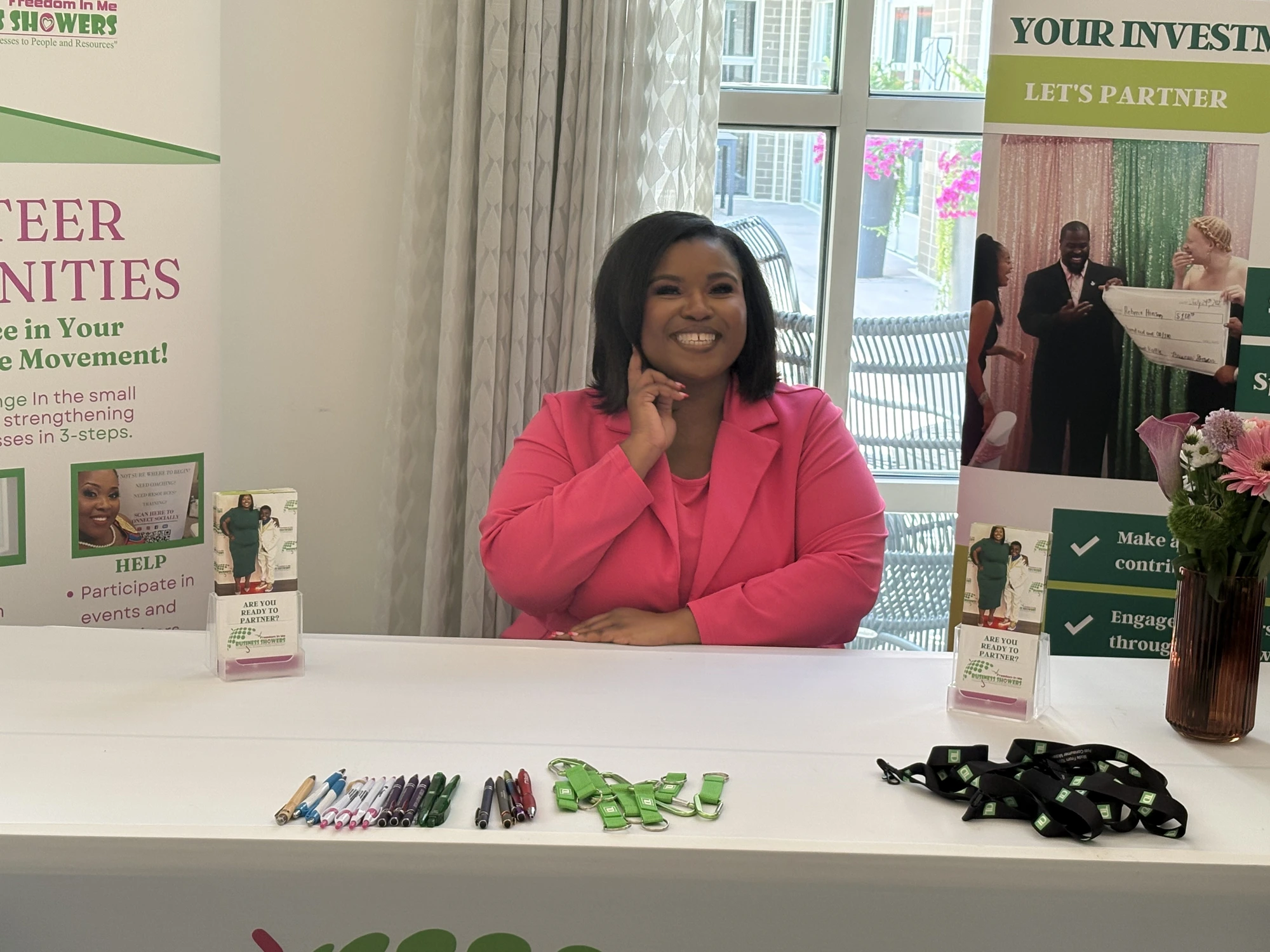
Donja Williams
Founder and CEO, Freedom In Me, LLC
Bridging the gap between the workforce employers need and the students preparing to enter it.
Donja Williams is a corporate consultant, entrepreneur, trainer, and workforce-development leader with experience spanning business operations, leadership, emerging technology, entrepreneurship, and youth development.
Her youth-focused work includes developing and supporting programming through the SMILE Girls program, Youth Business Showers, Unity Classical Charter School's PTC, the Black Youth Leadership Development Program, and initiatives focused on entrepreneurship and generational wealth.
This combination of corporate, entrepreneurial, and youth-development experience gives Donja a unique perspective on both sides of the workforce equation: what employers need from emerging talent and what students need before entering the workforce.
She created the AI Build Lab: Student Innovation and Entrepreneurship Camp to help bridge that gap. Through hands-on, real-world learning, students develop responsible AI skills, entrepreneurial thinking, digital-product experience, problem-solving abilities, collaboration skills, and the confidence to communicate and pitch their ideas.
Workforce readiness cannot begin after someone accepts their first job.
As employers respond to artificial intelligence, automation, and rapidly changing business needs, students must be prepared to think critically, use technology responsibly, solve problems, collaborate, communicate ideas, and create value.
Through its organizational consulting and workforce-development services, Freedom In Me helps employers improve systems, strengthen leadership, adapt to emerging technology, and prepare their teams for what is next. Through the AI Build Lab, Freedom In Me brings that workforce perspective to students — helping them develop the skills, confidence, and builder mindset to enter the future workforce as creators, innovators, entrepreneurs, and problem-solvers.
Where Donja’s work has focused.
The AI Build Lab curriculum, learning experience, and program standards are developed under Donja's leadership. Cohorts may be facilitated by Donja or by trained and approved AI Build Lab instructors. Every facilitator follows the established curriculum, student-safety expectations, and program-delivery standards.
Program by Freedom In Me, LLC.
Freedom In Me is a Charlotte, North Carolina-based training and consulting company helping organizations, professionals, entrepreneurs, and emerging talent prepare for the changing demands of business and work.
The company works on both sides of the workforce equation: helping employers prepare for the future of work while helping students prepare to become its future workforce.
“Freedom In Me helps employers prepare for the future of work — while helping students prepare to become its future workforce.”
Questions from parents, principals & partners.
Don’t see your question? Reach out through the inquiry form below — Donja answers every message personally.
Ask a questionLet’s build the AI Build Lab for your students.
The program is custom-scoped per school — we’ll match your calendar, cohort size, budget, and student outcomes. Donja follows up personally with next steps and a proposal.